Following are some of the projects that I did or that I was involved.
Internet Banking System Architecture (C4 Model)
Software Architecture Design
Author: Fausto Iván Zamora Arias
Repository: github.com/ivanzamoraarias/BankingSystemDesign
Summary
Complete architectural design of a modern internet banking system using the C4 model (Context → Containers → Components).
The design covers:
- System Context (Level 1): Customers, Web SPA, Mobile App, Core Banking, Complementary Systems, and Notification Service
- Container Diagram (Level 2): Frontend apps, Auth & Onboarding, BFF (Backend-for-Frontend), Notification Service, and Audit System
- Component details (Level 3): Authentication flow, transaction handling, biometric support, real-time notifications, and audit strategies
Technology Stack
- Frontend: ReactJS (SPA) + React Native / .NET MAUI
- Auth: Amazon Cognito + Rekognition (biometrics)
- Backend: AWS Lambda + API Gateway (BFF pattern)
- Data: DynamoDB, Redis (caching), Aurora PostgreSQL
- Notifications: SQS + SNS + Firebase Cloud Messaging
- Audit: DynamoDB Streams (CDC) + AWS Glue (batch ETL)
Key Design Decisions
- Microservices architecture for independent scaling
- Backend-for-Frontend (BFF) pattern for secure frontend communication
- Hybrid caching (Redis + DynamoDB)
- Dual audit strategy (real-time CDC for fraud detection + batch ETL for regulatory reporting)
- Multi-channel notifications (SMS, email, push)
The project includes detailed diagrams (C4 Levels 1–3) and a full architecture document.
Stakeholder Management for a National Bank Transfer System in Ecuador
MBA Project – USP/ESALQ
Authors: Fausto Iván Zamora Arias & Daniel R. Tasé Velázquez
link: you can read more here
Summary
This project analyzed how to successfully introduce a unified instant digital payment system in Ecuador (similar to Brazil’s PIX and Sweden’s Swish).
Key activities included:
- Comparative analysis of successful systems in Brazil and Sweden
- Mapping of all relevant stakeholders (public and private)
- Development of power/interest and commitment matrices
Main findings
The private banks that currently dominate the market with their own apps (Deuna – Banco Pichincha, Peigo – Banco de Guayaquil, Payphone – Produbanco) hold high power and are initially resistant. The public sector (especially the Central Bank of Ecuador) has formal power and veto capacity but lower technical readiness.
Recommendation
A structured stakeholder engagement strategy is required so that private banks move from “resistant” to “supporter,” while the Central Bank leads the project. This alignment is critical for a successful national instant payment system.
VR Experience for the Virtual Conservation of the Flamman Theater
Master’s Thesis – Chalmers University of Technology / University of Gothenburg (2022)
Author: Fausto Iván Zamora Arias
Supervisor: Thommy Eriksson
Examiner: Staffan Björk
Official link: GUPEA (or the bitstream you shared)
Summary
This master’s thesis digitally preserved the historic Flamman Theater in Gothenburg by creating an immersive Virtual Reality experience in Unreal Engine 4, playable on the Oculus Quest 2.
Goal
Recreate the atmosphere and experience of going to a classic cinema from the 1950s, so people can still “visit” and watch movies inside a building that no longer functions as a cinema.
What was developed
- Full 3D reconstruction of the Flamman Theater
- VR interaction (grabbable objects such as popcorn and nachos)
- AI-controlled Non-Player Characters (NPCs) walking around the theater
- Movie projection system (local video files + YouTube support) with spatial audio
- Game mechanics and level design based on MDA framework, GNS model, and gameplay design patterns
Research Questions
- What elements make a successful theater experience in VR?
- How can the think-aloud testing technique be adapted during COVID-19 restrictions?
Key results
- Successfully recreated the feeling of entering a classic cinema and watching a movie in VR
- Developed a hybrid testing methodology (remote + guided tests) that worked well under pandemic restrictions
- Demonstrated that game design techniques + VR can effectively support cultural heritage preservation
Keywords: Virtual Reality, Unreal Engine 4, Oculus Quest 2, Cultural Heritage, Game Design, Flamman Theater
Low-Cost Volumetric Video Pipeline from Capture to Game Engine
Master’s Project – Chalmers University of Technology / University of Gothenburg (2020)
Author: Fausto Iván Zamora Arias
Supervisor: Thommy Eriksson
link: you can read more here
Summary
Professional volumetric capture systems cost millions of dollars. This project developed a practical, low-budget pipeline that allows independent developers and small studios to create volumetric video and import it into a real-time game engine.
What was built
- Multi-camera capture setup using consumer depth cameras (Intel RealSense D415 preferred over Kinect V2)
- Calibration and capture workflow with DepthKit
- Mesh cleaning, lighting, and digital masking (DaVinci Resolve)
- Import and playback of volumetric sequences inside Unreal Engine 4
Key experiments
- Comparison of camera topologies (triangle vs. square arrangement)
- Side-by-side evaluation of Kinect V2 vs. RealSense D415
- Testing of different capture software (DepthKit vs. EF EVE)
Result
A complete, reproducible pipeline that successfully captures full-body volumetric performances and plays them in real time inside Unreal Engine 4 — demonstrating that high-quality volumetric content is achievable without professional-grade studios.
Space First Person:
BattleZone: all in C++ and OpenGl

Cross The River With Boxes:
Cross The River With Boxes is a Puzzle first-person shooter in which the primary mechanic is to cross the river using a gravitational pistol to move boxes of different sizes. Also, this is the first game that I developed in Unreal Engine 4. You can check it out here:


ChatImage:

Kertin's Fate:

Bit Girl at Global Game Jam 2020

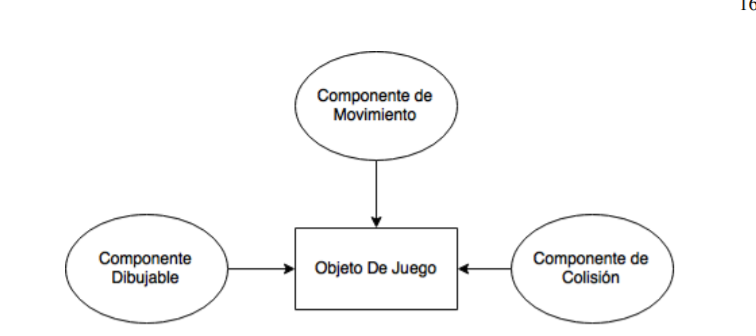
Java Online Game Engine:


3D platform Mova:


2D Platform:

Graphic Game Engine:
Vulkan first steps I had with tutorials arouns the internet.
Graphic Engine
Work with Vulkan for Games in 3D
This project is intended to create a basic Vulkan project for all its pipelines and objects.
Objects Instance. Physical Device Device Queue Command Pool Command Pool Buffer Sampler Device Memory.
Github: https://github.com/ivanzamoraarias/graphicEngine
AR Game:
One of the earliest encounters with unity is the following ball based AR game.The game was a project between Christian Almeida(https://www.linkedin.com/in/calmeidalara/) and me.
Comments
Post a Comment